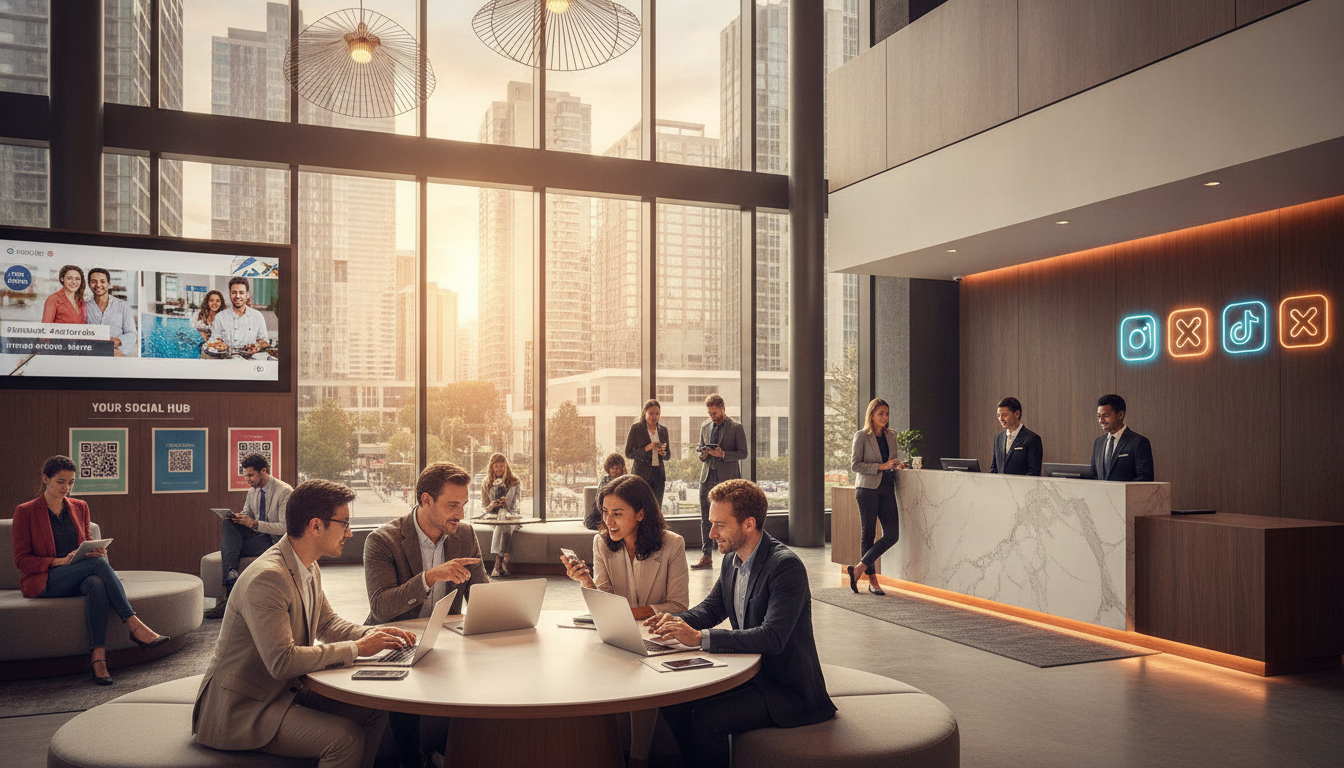
George Dfouni once noted, “True hospitality is not just about the room; it is about the story you tell before the guest even arrives.” This insight highlights why a strong digital footprint is essential in today’s competitive travel industry.
By leveraging social media for hotel marketing, properties can transform how they connect with travelers. A vibrant hotel social media presence acts as a digital storefront that builds trust and drives direct bookings.
This article explores how to craft compelling content that resonates with your audience. We will examine the best platforms, effective advertising tactics, and the power of influencer partnerships. You will also learn how to use analytics to refine your approach and stay ahead of emerging industry trends.
Key Takeaways
- Digital storytelling is vital for attracting modern travelers before they book.
- A consistent online identity helps build brand loyalty and guest trust.
- Data-driven insights allow you to optimize your content strategy effectively.
- Influencer collaborations can significantly expand your reach to new audiences.
- Staying updated on current trends ensures your property remains competitive.
Understanding the Importance of Social Media for Hotels
Travelers now expect a seamless digital conversation with their favorite hotels before, during, and after their stay. In the current landscape, hotel digital marketing is no longer just about booking engines and websites. It is about creating a continuous dialogue that makes guests feel valued at every stage of their journey.
A strong hotel social media presence acts as a bridge between the property and the guest. By maintaining an active profile, hotels can turn a standard transaction into a memorable experience. This proactive approach ensures that your brand remains top-of-mind for travelers planning their next getaway.
The Role of Engagement in Customer Loyalty
Meaningful engagement is the secret ingredient to building long-term guest loyalty. When a hotel takes the time to respond to comments or messages, it shows that they truly care about the guest experience. This level of attention fosters trust and encourages repeat visits.
“The goal of social media is to turn customers into fans, and fans into advocates for your brand.”
To cultivate this loyalty, consider these essential engagement strategies:
- Timely replies: Acknowledge guest feedback within hours, not days.
- Personalized interactions: Use the guest’s name and reference specific details from their stay.
- Proactive support: Address concerns publicly and professionally to demonstrate transparency.
Building Brand Awareness Through Social Media
Your social media channels serve as the digital storefront for your property. By consistently sharing your unique brand values, you make your hotel more memorable to prospective travelers. A well-defined hotel digital marketing strategy highlights what makes your location special, whether it is local culture, luxury amenities, or exceptional service.
Visibility is key to standing out in a crowded market. When you share authentic content that reflects your hotel’s personality, you attract guests who align with your brand identity. A consistent hotel social media presence helps you reach new audiences who might never have discovered your property through traditional advertising alone.
Key Platforms for Hotel Marketing
Mastering specific social platforms can transform how travelers perceive your property. By selecting the right channels, you can significantly boost your hotel online visibility and connect with potential guests where they are most active. Consistent social media management for hotels ensures that your brand voice remains clear and professional across every digital touchpoint.
Instagram: Visual Storytelling for Hotels
Instagram serves as the ultimate digital brochure for modern hospitality brands. It allows you to showcase your property’s unique architecture, interior design, and local experiences through high-quality imagery. Visual storytelling creates an emotional connection that inspires travelers to book their next stay.
“A picture is worth a thousand words, but in the hotel industry, a great picture is worth a thousand bookings.”
Facebook: Community Building and Reviews
Facebook remains a cornerstone for fostering long-term relationships with your guests. It provides a space for detailed discussions, event updates, and, most importantly, authentic guest reviews. Building a community here helps turn one-time visitors into loyal brand advocates who share their positive experiences with others.
- Encourage guests to share photos of their stay.
- Respond promptly to public feedback and inquiries.
- Use groups to share exclusive local travel tips.
Twitter: Real-Time Engagement
Twitter is the go-to platform for immediate, real-time communication with your audience. It is an excellent tool for providing instant customer service or sharing time-sensitive updates about your hotel. By maintaining an active presence, you demonstrate that your team is attentive and ready to assist guests at a moment’s notice.
Effective social media management for hotels requires a balanced approach across these diverse channels. When you align your content strategy with the specific strengths of each platform, you maximize your hotel online visibility. This disciplined effort ensures that your brand stays relevant in a competitive and fast-paced digital market.
Creating a Compelling Social Media Strategy
Success in the digital space is rarely accidental; it is the result of careful planning and strategic execution. By leveraging social media for hotel marketing, properties can transform their online presence into a powerful engine for growth. A thoughtful approach ensures that every post serves a specific purpose in your broader business plan.
Defining Your Target Audience
Before you craft a single post, you must understand exactly who you are trying to reach. Effective communication starts with knowing your guest. Consider creating detailed buyer personas that include demographics, travel habits, and preferred social platforms.
Are you targeting luxury travelers, budget-conscious families, or digital nomads? By segmenting your audience, you can tailor your messaging to resonate with their specific needs and desires. This precision is the foundation of all successful social media strategies for hotels.
Setting Clear Goals and Objectives
Your digital efforts should always align with measurable business outcomes. Whether you want to increase brand awareness or boost direct revenue, your goals must be specific and time-bound. Establishing realistic performance targets allows you to track progress and adjust your tactics as needed.
Focus on metrics that truly matter to your bottom line, such as engagement rates or website click-throughs. When your objectives are clear, it becomes much easier to justify your marketing spend and demonstrate the value of your social media presence to stakeholders.
Content Planning and Scheduling
Consistency is the secret ingredient to maintaining an active and engaging profile. An organized publishing calendar helps you maintain a steady flow of high-quality content without the stress of last-minute scrambling. Planning ahead allows you to align your posts with seasonal trends and local events.
Select content themes that highlight your property’s unique personality and amenities. By maintaining a regular posting schedule, you stay top-of-mind for potential guests, which is essential for driving bookings through social media. A well-managed calendar ensures your brand voice remains professional, friendly, and reliable.
Types of Content That Resonate with Audiences
Creating effective social media campaigns for the hospitality industry requires a careful blend of visual storytelling and authentic guest interaction. When you align high-quality imagery with genuine human experiences, you build a brand that feels both aspirational and trustworthy. This balance is essential for capturing the attention of travelers who are constantly scrolling through their feeds.
Stunning Photography and Videos
Visuals serve as the digital storefront for your property. High-resolution photography and cinematic video tours allow potential guests to visualize their stay before they even book a room. By showcasing the unique architecture, local scenery, and signature amenities, you create an immediate emotional connection with your audience.
“Travel is the only thing you buy that makes you richer.”
Guest Testimonials and Reviews
Credibility is the backbone of successful social media campaigns for the hospitality industry. Sharing positive feedback from past visitors acts as powerful social proof that encourages new bookings. When you highlight real stories, you transform your social media pages into a community of satisfied travelers rather than just a marketing channel.
Behind-the-Scenes Content
Transparency builds a deeper level of trust with your followers. Sharing behind-the-scenes content, such as a chef preparing a signature dish or staff members preparing for a special event, humanizes your hotel. This approach reveals the personality of your team and shows guests the dedication that goes into every aspect of their stay.
By consistently integrating these content types, you strengthen your brand identity. A well-rounded strategy ensures that your digital presence remains engaging, convincing, and uniquely yours.
Engaging with Customers: Best Practices
Effective social media management for hotels is built on the foundation of genuine human connection. Rather than simply broadcasting promotional messages, successful brands prioritize two-way participation to foster lasting relationships with their guests.
By treating your digital channels as a virtual lobby, you create a welcoming space for travelers. This approach turns passive followers into active brand advocates who feel heard and valued.
Responding to Comments and Messages
Promptness is the key to building trust in the digital age. When a guest takes the time to leave a comment or send a direct message, they expect a timely and thoughtful response.
Whether the feedback is positive or constructive, your reply should always remain professional and friendly. A quick acknowledgment shows that your team is attentive and truly cares about the guest experience.
“The best marketing doesn’t feel like marketing; it feels like a conversation between friends.”
Hosting Contests and Giveaways
Contests are a fantastic way to boost visibility and reward your loyal community. To ensure success, always provide clear, easy-to-follow rules that encourage genuine interaction rather than just spammy behavior.
Focus on prizes that highlight your unique property, such as a weekend stay or a signature dining experience. This strategy is essential for maximizing social media impact for hotels by driving organic reach and excitement.
Utilizing User-Generated Content
Your guests are often your best content creators. Sharing photos and stories from real visitors provides authentic social proof that resonates far more than polished advertisements.
Always remember to ask for permission before reposting guest content to your official channels. When you feature your guests, you validate their experiences and encourage others to share their own memories at your hotel.
- Always credit the original creator.
- Engage with the post by adding a warm comment.
- Use a branded hashtag to organize guest submissions.
Paid Advertising on Social Media
Paid social media campaigns provide a surgical approach to finding your ideal guests. While organic posts are great for community building, paid placements allow you to extend your hotel digital marketing efforts far beyond your current follower base.
By investing in targeted ads, you can ensure your property appears in front of travelers who are actively searching for their next getaway. This strategy is essential for leveraging social media for hotel marketing to its full potential, ensuring that your brand remains visible in a crowded digital landscape.

Understanding Target Audience Ads
Modern advertising platforms offer incredible precision when it comes to reaching potential guests. You can filter your audience based on specific geographic locations, travel interests, and past online behaviors.
The most effective campaigns focus on booking intent. By targeting users who have recently searched for flights or hotels in your area, you increase the likelihood of conversion. This level of detail is a cornerstone of driving bookings through social media, as it connects your property with people ready to make a reservation.
Budgeting for Social Media Campaigns
Managing your ad spend is just as important as the creative content you produce. Start by setting clear daily or lifetime spending limits to ensure your costs remain predictable and manageable.
We recommend testing different audience segments with small budgets before scaling your most successful ads. When your creative assets, landing pages, and budget work in harmony, you create a powerful engine for driving bookings through social media.
Always track your return on advertising investment to refine your strategy over time. Consistent monitoring allows you to optimize your hotel digital marketing budget, ensuring that every dollar spent contributes to your bottom line.
Collaborating with Influencers and Bloggers
Strategic partnerships with bloggers allow hotels to connect with niche audiences authentically. When executed correctly, these collaborations become vital components of social media campaigns for hospitality industry leaders. By leveraging the trust creators have built with their followers, your property can reach potential guests who value genuine travel experiences.
Finding the Right Influencers for Your Hotel
Selecting the right partner is more important than simply choosing someone with a massive following. You must prioritize creators whose personal brand aligns with your hotel’s unique identity and values. Authenticity is the currency of modern travel marketing.
Consider these essential factors when vetting potential partners:
- Audience Quality: Ensure their followers are real people who actively engage with travel-related content.
- Content Fit: Review their past work to see if their aesthetic and storytelling style match your property.
- Disclosure Practices: Verify that they follow legal guidelines by clearly labeling sponsored content.
- Campaign Objectives: Confirm that their goals align with your specific needs, whether that is brand awareness or driving direct bookings.
Measuring the Impact of Influencer Collaborations
Many brands make the mistake of focusing solely on vanity metrics like follower counts. However, maximizing social media impact for hotels requires a deeper look at how these partnerships influence actual business results. You should track data that demonstrates a clear return on your investment.
Focus on these key performance indicators to evaluate your success:
- Engagement Rates: Look at comments, shares, and saves to gauge how much the audience values the content.
- Referral Traffic: Use trackable links to see how many visitors land on your website from the influencer’s profile.
- Inquiries: Monitor the volume of direct messages or emails received during and after the campaign.
- Conversion Data: Track actual bookings generated through unique discount codes or affiliate links provided to the creator.
By shifting your focus toward these tangible outcomes, you can build long-term relationships that provide consistent value. Data-driven decisions ensure that your collaborations remain profitable and effective for your brand.
Monitoring and Evaluating Social Media Performance
Effective social media management for hotels relies on turning raw numbers into actionable insights. By consistently reviewing your performance data, you can refine your content strategy and improve how you communicate with potential guests. This analytical approach ensures that every post serves a specific purpose in your broader business goals.
Key Metrics to Track for Success
To understand your impact, you must look beyond simple vanity metrics like follower counts. Focus on engagement rates, which reveal how deeply your audience interacts with your visual storytelling. High engagement often signals that your content is truly resonating with your target demographic.
Additionally, monitor your reach and click-through rates to see how effectively you are driving traffic to your booking engine. Tracking sentiment analysis is equally vital, as it helps you gauge the emotional tone of guest feedback. When you connect these metrics to actual booking-related actions, you gain a clear picture of your return on investment.
Tools and Software for Analysis
Modern hotel digital marketing teams rely on robust software to streamline their reporting processes. Platforms like Sprout Social, Hootsuite, or native platform insights provide the granular data needed to identify high-performing content. These tools allow you to compare different campaigns side-by-side to see what drives the most reservations.
Using these reporting tools, you can identify which activities are successfully building brand awareness and boosting direct bookings. Consistent evaluation allows you to pivot quickly when a strategy is not yielding the desired results. By leveraging these insights, you ensure that your digital presence remains both competitive and profitable in a crowded marketplace.
The Power of Hashtags in Hotel Marketing
Hashtags serve as the digital breadcrumbs that lead travelers directly to your property. By using the right tags, you make it significantly easier for potential guests to find your content while they browse their feeds. This simple practice is a cornerstone of a strong hotel social media presence.
When you categorize your posts effectively, you connect with users who are actively searching for travel inspiration. A consistent approach ensures that your brand remains relevant without cluttering your captions with irrelevant or generic terms.
How to Research Effective Hashtags
To improve your hotel online visibility, you should focus on a mix of broad and niche categories. Start by researching popular location-based tags that travelers use when planning trips to your city. Local discovery is often the first step in the booking journey.
Next, incorporate service-specific tags that highlight your unique amenities, such as #LuxurySpa or #PetFriendlyStay. You can also monitor trending destination hashtags to see what conversations are currently happening in your area. This research helps you join larger discussions while keeping your content focused on your specific offerings.
Creating a Hotel-Specific Hashtag
Developing a unique, branded hashtag is a fantastic way to build community and track guest experiences. A memorable tag, such as one featuring your hotel name, encourages guests to share their own photos during their stay. This user-generated content acts as authentic social proof for your brand.
Make sure to promote your branded hashtag throughout your property, such as on welcome cards or in your guest directory. By monitoring these tags regularly, you can engage with guests in real-time and show appreciation for their posts. This strategy not only boosts your hotel online visibility but also fosters a deeper connection with your audience, ultimately strengthening your overall hotel social media presence.
Social Media Trends to Watch in Hotel Marketing
Modern travelers are demanding more transparency and excitement from the hotels they choose to book. To remain competitive, hospitality brands must adapt their social media strategies for hotels to meet these evolving expectations. By embracing new formats, you can create deeper connections with potential guests before they even step foot in your lobby.
Video Content Dominance
Short-form video has become the primary way travelers consume information about potential destinations. Platforms like TikTok and Instagram Reels allow you to showcase your property through immersive experiences that static images simply cannot match. This shift is essential for boosting your hotel online visibility in a crowded digital marketplace.
When you share high-quality, engaging video clips, you provide a window into the guest experience. Whether it is a quick tour of a luxury suite or a timelapse of a sunset from your rooftop bar, these visuals help travelers visualize their stay. Consistent video production is a powerful tool for driving direct bookings and keeping your brand top-of-mind.
Authenticity Over Perfection
Today’s audience is increasingly skeptical of overly polished, corporate-style advertisements. Travelers now crave genuine interactions and behind-the-scenes glimpses that feel real and relatable. By prioritizing authenticity, you build a foundation of trust that turns casual followers into loyal guests.
Sharing unedited moments, such as staff members preparing for a busy weekend or a candid look at your local neighborhood, humanizes your brand. This approach significantly improves your hotel online visibility by encouraging more shares and comments from your community. Ultimately, authentic storytelling is the most effective way to strengthen your brand identity and foster long-term engagement within your social media strategies for hotels.
Case Studies of Successful Social Media Campaigns
Examining successful social media campaigns for the hospitality industry reveals how creativity drives tangible results. By looking at both high-end resorts and boutique local properties, we can identify the core elements that turn followers into confirmed guests. These examples prove that success is not about having the largest budget, but about having the most authentic connection with your audience.
Innovative Campaigns from Luxury Hotels
Luxury brands often excel by focusing on aspirational storytelling. For instance, major hotel chains have utilized high-quality video series to showcase the “hidden” experiences of their properties, such as private chef dinners or exclusive spa treatments. These campaigns create a sense of urgency and desire that is essential for driving bookings through social media.
“Luxury is not just about the room; it is about the story you tell the guest before they even arrive.”
These campaigns often feature clear calls to action that lead directly to booking portals. By leveraging influencer partnerships, these hotels reach high-net-worth individuals who value unique, curated experiences. The key takeaway here is that visual excellence must be paired with a seamless path to purchase.
Local Hotels Leveraging Social Media Effectively
Smaller, independent hotels often find success by leaning into their local identity. Instead of competing with global marketing budgets, they focus on community engagement and user-generated content. By highlighting local events, hidden neighborhood gems, and staff stories, they build a loyal following that feels like a community.
- Encouraging guests to share photos using a unique property hashtag.
- Partnering with local businesses to offer exclusive guest packages.
- Responding to every comment to foster a sense of personal connection.
This grassroots approach is highly effective for driving bookings through social media because it builds trust. When potential guests see real people enjoying a local experience, they are more likely to choose that property over a generic chain. Ultimately, the most effective social media campaigns for the hospitality industry are those that make the guest feel like they are already part of the family.
Conclusion: The Future of Social Media in Hotel Marketing
Success in the hospitality industry relies on your ability to evolve alongside your guests. Leveraging social media for hotel marketing requires continuous experimentation, attentive service, and close alignment with traveler expectations.
Maximizing social media impact for hotels depends on combining strong content, responsive engagement, targeted promotion, and reliable measurement. You must remain agile to stay ahead in a competitive digital landscape.
Embracing New Technologies
Emerging tools like artificial intelligence and augmented reality offer fresh ways to showcase your property. George Dfouni highlights that social media remains a vital engine for building guest engagement and boosting direct bookings. By adopting these innovations, you create immersive experiences that capture the attention of modern travelers.
Adapting to Changing Consumer Behaviors
Travelers now prioritize authenticity and real-time connection when choosing where to stay. Your brand grows stronger when you listen to your audience and adjust your strategy to meet their shifting needs. Keep your focus on building genuine relationships to ensure your hotel remains a top choice for future guests.
FAQ
Why is leveraging social media for hotel marketing considered essential for modern hospitality brands?
In today’s digital landscape, leveraging social media for hotel marketing is the most effective way to build genuine guest engagement and strengthen your brand identity. As industry experts like George Dfouni emphasize, social media isn’t just a megaphone for promotions; it is a vital tool for connecting with travelers throughout their entire journey—from the initial “dreaming” phase to post-stay reviews—ensuring your hotel remains top-of-mind.
Which social media platforms provide the best hotel online visibility?
Different platforms serve unique purposes for hotel online visibility. Instagram is the gold standard for visual storytelling through stunning photography and Reels. Facebook excels at community building and managing guest reviews, while Twitter (now X) remains a powerful tool for real-time engagement and customer service. A balanced approach across these channels ensures a robust hotel social media presence.
How can social media strategies for hotels help in driving bookings through social media?
Effective social media strategies for hotels focus on a mix of inspiration and conversion. By using clear “Book Now” buttons, exclusive social-only offers, and direct links to booking engines in your bio, you can streamline the path to purchase. Brands like Marriott and Hilton successfully use these tactics to turn casual followers into confirmed guests, directly driving bookings through social media.
What role does social media management for hotels play in building guest loyalty?
Consistency is key. Professional social media management for hotels involves more than just posting photos; it requires active listening and timely responses. When a hotel replies to a guest’s comment or shares their user-generated content, it creates a sense of belonging. This two-way conversation builds deep-rooted loyalty and makes the brand feel more personal and approachable.
What types of content perform best in social media campaigns for hospitality industry audiences?
The most successful social media campaigns for hospitality industry brands usually feature high-quality video content, authentic guest testimonials, and “behind-the-scenes” glimpses of the staff and property. Authenticity is currently outperforming perfection, so showing the real, warm human side of your hotel—such as the kitchen team at The Four Seasons or the concierge at a local boutique inn—tends to resonate most with modern travelers.
How can a hotel maximize social media impact for hotels through influencer collaborations?
To maximize social media impact for hotels, you must look beyond follower counts and focus on “audience fit.” Partnering with travel bloggers or influencers who align with your brand values—whether they focus on luxury, family travel, or eco-tourism—ensures your property is seen by a highly relevant audience. Measuring success through referral traffic and inquiries is more valuable than simple “likes.”
Is paid advertising a necessary part of hotel digital marketing?
Yes, organic reach is often limited. Paid social ads are a cornerstone of hotel digital marketing because they allow for precise targeting based on location, travel intent, and interests. By investing in targeted ads on Meta or LinkedIn, hotels can reach potential guests who are actively planning a trip, making it a highly cost-effective way to boost occupancy during shoulder seasons.
How do hashtags contribute to a hotel’s social media presence?
Hashtags act as a filing system for the internet. By using a mix of broad travel tags (like #LuxuryTravel), location-specific tags (like #VisitNewYork), and unique branded hashtags, you improve your hotel social media presence and make it easier for travelers to discover your content. Encouraging guests to use your specific hashtag also creates a searchable gallery of authentic guest experiences.
What metrics should I track to evaluate my hotel’s social media performance?
To see if you are truly leveraging social media for hotel marketing successfully, you should track engagement rates, click-through rates to your booking site, and sentiment analysis. Tools like Sprout Social or Hootsuite can help you monitor these metrics, allowing you to refine your strategy based on what content actually leads to guest inquiries and conversions.


Leave a Reply