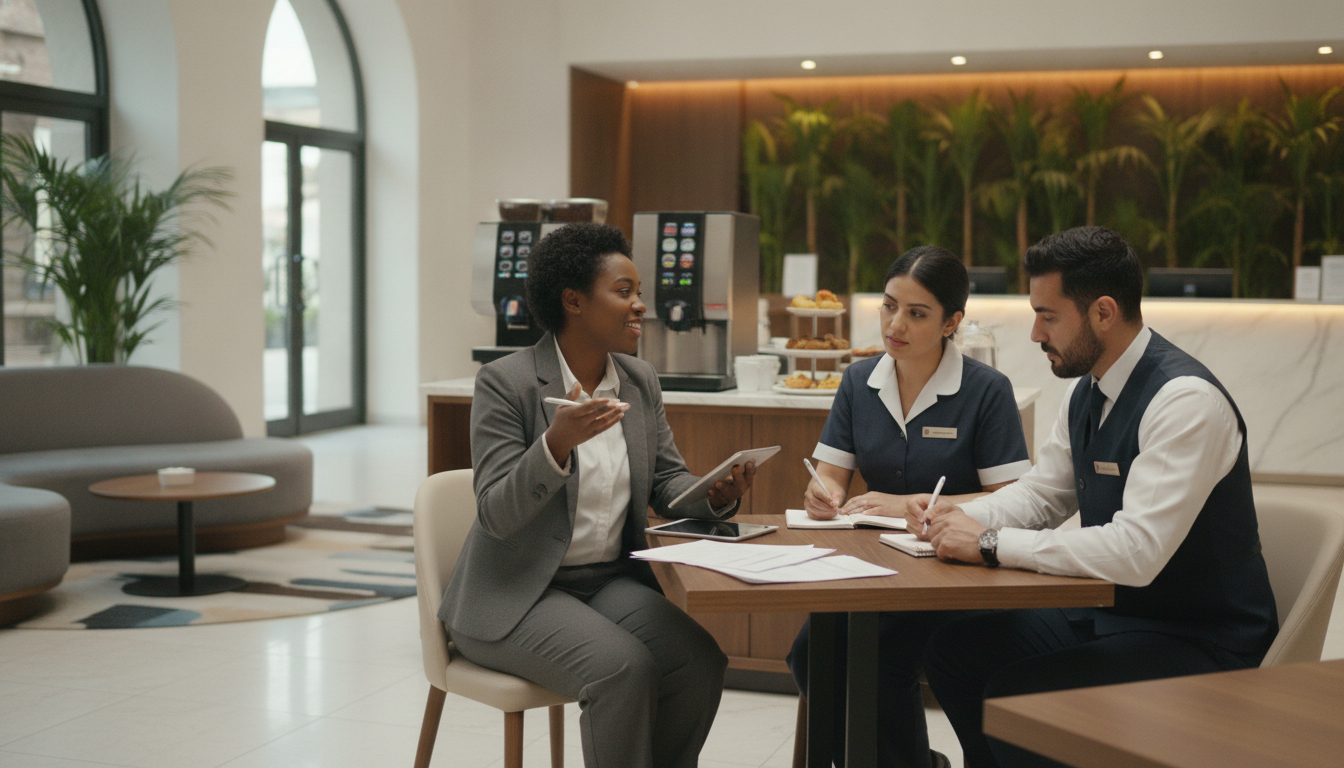
As a hotelier and CEO of Independent Hospitality, I’ve learned that people are the heart of a successful hotel. High employee engagement in hotels is key, not just for HR. It’s a fundamental business strategy that boosts guest satisfaction and success.
When our teams feel valued, they offer better service and create unforgettable guest experiences. In this article, I’ll share my insights on creating a culture of excellence. We’ll look at ways like transparent communication, leadership, technology, and wellness initiatives.
By focusing on employee engagement in hotels, we can build stronger, more resilient teams. Let’s explore how to transform our workplace culture to succeed in today’s competitive hospitality world.
Key Takeaways
- Prioritizing staff morale directly correlates to superior guest service and operational efficiency.
- Transparent communication serves as the foundation for building trust within hospitality teams.
- Effective leadership requires active recognition of individual contributions and professional growth.
- Integrating modern technology can streamline workflows and reduce burnout for frontline staff.
- Focusing on workplace well-being is essential for long-term retention and team stability.
Understanding Employee Engagement in the Hotel Industry
In my years as a hotelier, I’ve learned that the heart of any hotel is its people. I see engagement as a meaningful connection employees have with their work, colleagues, and guests. It’s what makes them feel valued every day.
Improving staff satisfaction means creating a culture where everyone feels important. It’s not just about the money; it’s about feeling seen and heard.
What is Employee Engagement?
At Independent Hospitality, I’ve seen engagement as an active state of mind. It’s about listening to staff needs and supporting them to do their best.
“True engagement happens when employees understand that their daily responsibilities are not just tasks, but essential contributions to the guest experience.”
When we value daily tasks, we change the workplace. This change is key to improving staff satisfaction and keeping our team motivated, even when it’s busy.
Why is it Important?
A highly engaged team makes a big difference in the hotel. From consistent service to better guest interactions, the benefits are clear and measurable.
| Engagement Factor | Low Engagement Impact | High Engagement Benefit |
|---|---|---|
| Service Quality | Inconsistent delivery | Exceptional guest experiences |
| Staff Retention | High turnover rates | Long-term team loyalty |
| Accountability | Lack of ownership | Proactive problem solving |
By focusing on these areas, we build a culture of accountability and well-being. Improving staff satisfaction is key for any leader aiming for a sustainable and successful hospitality brand.
The Impact of Employee Engagement on Guest Satisfaction
As a hotelier, I’ve learned that the heart of any hotel is its staff. Walking into an Independent Hospitality location, I feel the vibe right away. High hotel employee morale is key to a great guest experience.
Connecting the Dots
Staff feelings show in every guest interaction. When they feel valued, they show warmth and care. This makes a stay unforgettable.
“Service is not a transaction; it is a human connection that begins with the person behind the desk.” — George Dfouni
High hotel employee morale means staff are more attentive and professional. They don’t just follow rules; they anticipate needs. This is what makes us stand out.
Positive Outcomes
Investing in my team boosts our guest feedback scores. Happy employees work better together, making operations smoother. Guests rarely see the hard work behind the scenes.
The perks of focusing on our people include:
- Fewer avoidable mistakes during check-in and service.
- A more consistent guest experience in all areas.
- Staff are more willing to go the extra mile for guests.
My aim is to empower every staff member to do their best. By making hotel employee morale a priority, we ensure guests get the service they expect and deserve.
Strategies for Boosting Employee Engagement
Improving hotel team performance starts with daily interactions. As a hotelier and CEO of Independent Hospitality, I’ve found success in simple, repeatable practices. These fit well into our fast-paced industry.
Effective Communication Methods
Clear communication is key for a high-performing team. I suggest starting the day with focused, concise briefings that outline the day’s goals. This helps team members feel confident and ready to serve well.
It’s also important to be accessible. Managers should have an open-door policy. This lets staff feel free to share questions or ideas. Being on the floor helps leaders solve problems before they get big.
Recognizing Employee Achievements
Recognition is a powerful tool often overlooked in busy hotels. Celebrating small wins is as important as big achievements. When you publicly praise a job well done, you encourage behaviors that please guests.
Whether it’s a quick shout-out or a formal note, these gestures boost morale. Employees who feel valued stay committed. Consistency in this area makes excellence the norm, not the exception.
Creating a Supportive Environment
A supportive environment lets employees share concerns without fear. I encourage supervisors to create a culture of psychological safety. Here, feedback is seen as a gift, not a complaint. This approach helps us solve problems early and keep a positive vibe.
By focusing on these strategies, we build a workplace that attracts and keeps the best talent. My experience with Independent Hospitality shows that investing in people leads to great results. Empowered employees are the heart of any successful hotel.
The Role of Leadership in Employee Engagement
As a hospitality executive, I’ve found that the hotel’s tone comes from the top. Leaders who are visible and engaged create a culture of trust and high standards. At Independent Hospitality, we make engagement a daily habit, not just an event. This is one of the best employee retention strategies today.
Leading by Example
Staff members look to their managers to know what’s expected. If I don’t help during a busy shift, I can’t expect my team to do more for our guests. Visible leadership builds a sense of shared purpose, keeping morale high.
Being consistent in decision-making is key for building trust. When everyone is treated the same, employees feel respected and valued. This is at the heart of my management style, helping us keep our best talent.
Training Managers Effectively
Managers connect the executive vision with daily operations. I focus on training that teaches leaders to give timely, constructive feedback, not just criticize. Coaching turns a standard supervisor into a mentor.
Investing in leadership development helps us keep staff longer. Managers who listen and support their teams create a stable place where staff can grow. The table below shows how different leadership styles affect the work environment.
| Leadership Style | Impact on Staff | Retention Outcome |
|---|---|---|
| Passive/Absent | Low morale and confusion | High turnover rates |
| Micromanagement | Reduced creativity and stress | Moderate turnover |
| Supportive/Coaching | High engagement and loyalty | Excellent retention |
Fostering a Positive Work Culture
Looking at Independent Hospitality’s success, culture stands out as our biggest strength. As a hotelier, I’ve learned that a healthy work environment is key. By focusing on hotel staff motivation, we empower our team to do their best every day.
Building Team Cohesion
Success in hospitality depends on teamwork. I push my teams to break down barriers and talk openly. When everyone knows their part in the big picture, they feel closer to their colleagues.
This unity boosts hotel staff motivation. When teams work well together, guests have a better experience. I remind everyone that we’re all in this together, aiming for the same goal.
Encouraging Diversity and Inclusion
A positive culture starts with respect and representation. I believe diverse voices make our operations stronger. Inclusion is more than a policy; it’s a core value that makes everyone feel at home.
Creating a safe and valued space boosts hotel staff motivation. When people feel respected, they share ideas that enhance our service. My aim is to make sure every voice at Independent Hospitality is heard and celebrated.
Implementing Feedback Mechanisms
I think the key to a great hotel environment is listening to staff feedback well. When team members feel heard, they care more about the hotel’s success. This is key for fostering positive workplace culture, turning complaints into chances to grow.
Employee Surveys and Polls
To know what’s going on in your hotel, you need to collect feedback regularly. Use different tools to make sure everyone’s voice is heard:
- Short Pulse Surveys: Quick, weekly surveys that take under two minutes.
- Anonymous Suggestion Boxes: Digital or physical places for honest feedback.
- Listening Sessions: Casual group talks where leaders listen more than they talk.
These methods spot trends early. Simple, direct questions help more people participate from all areas.
Utilizing Feedback for Improvement
Getting feedback is just the start; showing you listen is the real magic. At Independent Hospitality, I’ve seen that visible follow-up is crucial. If employees see their ideas make a difference, they’ll keep sharing.
“True leadership is not about having all the answers, but about creating a system where the best ideas can surface from anywhere in the organization.”
When you tackle a problem, share the solution with everyone. This openness builds trust and shows you’re serious about fostering positive workplace culture. Feedback that’s ignored is worse than none at all, as it leads to distrust.
Career Development Opportunities
Your hotel team productivity grows when you invest in their careers. When staff see their hard work leading to future success, they work harder. I believe in professional growth as a key to keeping your team engaged and productive.
Creating Clear Career Paths
Employees get stuck if they can’t see their future in the company. I suggest creating clear career paths for them. This shows how a front-desk agent can move up to management or specialized roles. It helps your team see a future with your brand.
“True leadership in hospitality is about building a culture where every employee knows that their professional growth is a priority, not an afterthought.”
Defining these paths motivates staff to grow professionally. This boosts hotel team productivity as they work towards clear goals.
Offering Training Programs
Learning specific to each role is key for quality across departments. I recommend structured training in technical skills and leadership. This prepares staff for their current and future roles.
Here are some ways to improve your training:
- Cross-training: Let employees learn tasks in different departments for a better understanding of hotel operations.
- Mentorship programs: Pair new staff with experienced leaders to share knowledge.
- Certification courses: Support staff in getting industry-recognized credentials to boost their skills.
By focusing on these learning chances, you show your team’s worth. This approach boosts hotel team productivity and keeps your team loyal and skilled.
Work-Life Balance Initiatives
As a hotelier, I’ve found that supporting our team’s life outside work is key. Our fast-paced industry makes it hard to disconnect. Yet, finding balance is crucial for boosting employee morale in hospitality industry settings.
When we meet our staff’s personal needs, their dedication and service quality improve. This shows how important it is to support them.
Flexible Scheduling Options
Hospitality is a 24/7 business, but our employees shouldn’t give up their personal lives. Offering predictable and flexible schedules helps them manage their lives better. This reduces burnout and keeps our workforce reliable.
Here are some strategies for better flexibility:
- Self-scheduling tools for easy shift swaps.
- Advanced notice for shift changes to help with personal planning.
- Compressed work weeks for some departments to allow for more rest.
Mental Health Support
Supporting our staff’s mental health is as crucial as offering good wages. I believe that boosting employee morale in hospitality industry settings requires a safe space for stress talks. We need to go beyond traditional benefits and offer real support for hotel work’s unique pressures.
Here are ways to create a supportive environment:
- Access to confidential counseling services or employee assistance programs.
- Encouraging regular breaks and ensuring staff take their time off.
- Training managers to spot burnout signs and offer support.
When we treat our employees as whole people, not just service providers, we build a stronger team. Investing in these initiatives is not just right; it’s smart for long-term success in hospitality.
Harnessing Technology for Engagement
At Independent Hospitality, we’ve seen how the right tech changes team engagement. Tech is a key support, not a replacement for personal leadership. It makes daily tasks smoother, keeping everyone informed and valued, no matter their shift or where they are.
Employee Engagement Platforms
Today’s employee engagement platforms are a central place for all staff needs. Managers can share updates, celebrate wins, and give recognition quickly. This keeps everyone connected, a big challenge in hotels that never sleep.
These platforms help us build a real digital workplace engagement. When recognition is easy to see, it creates a culture of thanks. It’s not about replacing face-to-face; it’s about making daily connections better.
Utilization of Communication Tools
Good hotel employee communication tools are key for managing different departments. They make scheduling and shift changes easier. They also let staff share their thoughts and ideas easily.
Clear internal messaging cuts down on confusion and stress. I believe tech should help people, not the other way around. The right employee engagement platforms make our work place more open and supportive.
Using hotel employee communication tools keeps our team focused on what’s important. Digital workplace engagement helps keep morale and efficiency high. This lets me lead clearly, knowing my team has what they need to do well.
Measuring Employee Engagement Effectively
You can’t improve what you don’t measure, especially with your staff. Many leaders gather data but don’t plan to change. As CEO of Independent Hospitality, I’ve learned that data is the backbone of a thriving hotel. You must use employee engagement metrics to make data actionable.
Key Performance Indicators (KPIs)
To truly understand your team, look at specific patterns. High turnover rates often signal deeper issues. By tracking retention, you can see which departments need more support or better leadership.
Absenteeism is another key indicator often overlooked. When staff members frequently miss shifts, it usually means low morale or burnout. Using hotel workforce analytics helps spot these trends early and act before they affect your guest experience.
Regular Assessment Methods
I suggest using a mix of quantitative and qualitative tools to keep a pulse on your team. Annual surveys are not enough to capture the mood of a busy hotel staff. Instead, use short, frequent polls for real-time insights into how employees feel about their tasks.
Internal mobility is a powerful metric showing if your team sees a future in your organization. Promoting from within sends a clear message that you value growth. Consistent staff satisfaction measurement keeps your management team accountable for the culture they build every day.
The goal is to bridge the gap between data and action. If you collect feedback, you must be ready to share the results and explain the next steps. This transparency builds trust and shows your employees that their voices matter to the leadership team.
Success Stories: Hotels with High Engagement Rates
In the world of hospitality, success often comes from engaged teams. I’ve studied top hotels and how they change their culture for exceptional results. By focusing on the hospitality employee experience, they build loyalty that helps both staff and guests.
Case Studies of Leading Hotels
Top hotels connect with their teams through regular talks and real recognition. For example, some hotels have daily “huddles” to make sure everyone feels valued. These leading hotel practices create a sense of belonging, something big hotels often lack.
Another key factor is investing in staff growth. Hotels that offer clear career paths and mentorship turn entry-level jobs into long-term careers. This focus on people is a big part of many hotel engagement success stories I’ve seen at Independent Hospitality.
Lessons Learned
Engagement is an ongoing effort, not a one-time thing. Managers need to support their teams by removing barriers and giving them the tools to succeed. When leaders focus on the human element, the whole hotel benefits.
I think every hotelier can achieve these results by focusing on their culture. Here’s a quick look at how certain strategies can change a hotel’s atmosphere.
| Strategy | Primary Benefit | Impact Level |
|---|---|---|
| Transparent Communication | Builds Trust | High |
| Structured Recognition | Boosts Morale | Very High |
| Career Development | Increases Retention | High |
| Supportive Management | Reduces Burnout | Very High |
Conclusion: Taking Action on Employee Engagement
Changing your property starts with your team. A good hotel employee engagement plan is about small, steady actions. These show your staff they matter.
Essential Pillars for Success
Start with clear talk, regular praise, and real career help. These are key to improving your hospitality team. By focusing on these, you build a place where talent thrives.
Taking the First Step
Choose one thing to get better at this week. It could be a new feedback system or better training for leaders. Your hard work will pay off. Being people-focused makes your brand stronger and improves guest experiences.
As CEO of Independent Hospitality, I see the impact every day. Begin your journey today and see your team soar. My time at Independent Hospitality shows that caring for your team makes your business grow.
FAQ
How do I define employee engagement in hotels based on my experience at Independent Hospitality?
For me, engagement is more than a smile. It’s the deep connection my team feels with their work, each other, and our guests. To boost staff happiness, I listen closely and make sure everyone knows they’re crucial to our success.
In what ways does hotel employee morale directly influence guest satisfaction?
Hotel morale is key to great service. When my team is engaged, they serve better. This leads to fewer mistakes and memorable guest experiences, shaping our hotel’s reputation.
What are the most effective strategies for enhancing hotel team performance?
To improve team performance, I focus on clear briefings, accessible management, and recognizing achievements. At Independent Hospitality, celebrating small wins and supporting my team helps them excel.
What specific employee retention strategies do I recommend for hospitality executives?
My top retention strategies include leading by example. I focus on fair treatment, timely feedback, and training managers to mentor. This builds trust and keeps top talent, ensuring excellence across the property.
How can I go about fostering a positive workplace culture in a busy hotel environment?
To create a positive culture, I build team cohesion and value diversity and inclusion. At Independent Hospitality, I ensure every voice is heard, fostering a sense of belonging and teamwork.
What is the key to maintaining long-term hotel staff motivation?
Staff motivation comes from clear career paths and growth opportunities. Offering specialized training and cross-training makes my team more invested in their future, boosting their dedication.
Does improving engagement actually lead to higher hotel team productivity?
Yes, engagement directly boosts productivity. When my team at Independent Hospitality sees how their skills fit into the bigger picture, they work better, are more accountable, and need less supervision.
What is the best way of boosting employee morale in the hospitality industry during stressful periods?
To boost morale, I focus on work-life balance. I support flexible scheduling and mental health initiatives to prevent burnout. My goal is to respect my team’s personal time, ensuring they’re energized for our guests.
How do I suggest using technology to improve employee engagement in hotels?
I suggest using platforms and tools for easier updates and communication. At Independent Hospitality, technology helps streamline tasks, making scheduling and conversations more efficient.
How should a CEO like myself measure the success of these engagement initiatives?
I track KPIs like survey participation, retention, and internal mobility. Regular assessments, like pulse polls, help us turn feedback into real improvements at Independent Hospitality.



Leave a Reply